Changes to positive self-schemas after a positive imagery training are predicted by participant characteristics in a sample with elevated depressive symptoms
Abstract
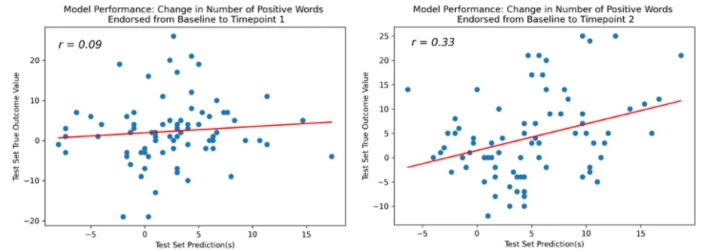
Background: Depressed individuals have both heightened negative self-views and reduced positive self-views. The self-referential encoding task (SRET) can capture depressed individuals’ self-schemas by asking them to endorse whether a word describes them or not. Digital interventions that target positive biases in depression can help improve positive self-schemas; however, it is important to determine who may respond best to these interventions. In the current study, we used a machine learning approach to predict changes in positive self-schemas on the SRET after a digital intervention. Methods: Participants were randomized to a digital imagery training that was either positive (n = 39) or neutral (n = 38) and completed the intervention every other day for 2 weeks. Participants also completed the SRET and self-report measures at pre-, mid-, and post-intervention to measure their self-schemas and psychopathology symptoms. Results: Results indicate the models were able to moderately predict changes in the number of self-referential positive words endorsed on the SRET, solely using participants’ baseline characteristics (rTest = 0.33). Conclusions: These findings suggest that certain characteristics may predict response to a digital intervention focused on improving positive biases, and current findings emphasize the use of machine learning to improve treatment match and triage persons to treatments that may work best.